Advanced Electrical Submersible Pumps (ESP)
Understanding and Mastering Electrical Submersible Pumps (ESP): From Basic ESP Programming to Advanced Submersible Pump Repair and Pressure Management
Course content
Introduction
Electric Submersible Pumps (ESPs) are among the most widely used artificial lift systems in the oil and gas industry, enabling efficient production from high-volume, deep, deviated, and challenging wells. As production environments become increasingly complex, professionals responsible for ESP selection, operation, and maintenance must possess advanced technical expertise to ensure reliable performance, minimize operational risks, and maximize asset value.
The Advanced Electrical Submersible Pumps (ESP) Training Course is designed to provide engineers, technicians, production specialists, and maintenance professionals with comprehensive knowledge of advanced ESP technology, system design, installation practices, troubleshooting techniques, and performance optimization. Participants will gain practical insights into improving production efficiency, reducing equipment failures, extending equipment life, and applying industry best practices for ESP systems operating in demanding field conditions.
Through technical discussions, practical exercises, and real-world case studies, this course bridges the gap between theoretical concepts and field applications, enabling participants to confidently manage ESP systems throughout their operational lifecycle.
Course Objectives
By the end of this training course, participants will be able to:
Develop an advanced understanding of Electrical Submersible Pump (ESP) systems and their operating principles.
Identify the functions and interactions of major ESP components and auxiliary equipment.
Design ESP systems for a variety of reservoir conditions and production requirements.
Apply industry best practices for successful ESP installation and commissioning.
Diagnose electrical, mechanical, and production-related failures using structured troubleshooting methods.
Evaluate operating data and performance indicators to improve pump efficiency.
Implement preventive maintenance strategies that reduce downtime and operational costs.
Optimize ESP performance to maximize production while extending equipment service life.
Analyze field case studies to solve real operational challenges using proven engineering practices.
Improve decision-making for ESP selection, operation, and long-term asset management.
Course Outline
Day 1: Advanced Fundamentals of Electrical Submersible Pumps
Understanding ESP Technology
Introduction to artificial lift systems
ESP applications in modern oil and gas production
Advantages and limitations of ESP technology
ESP operating principles
Production system integration
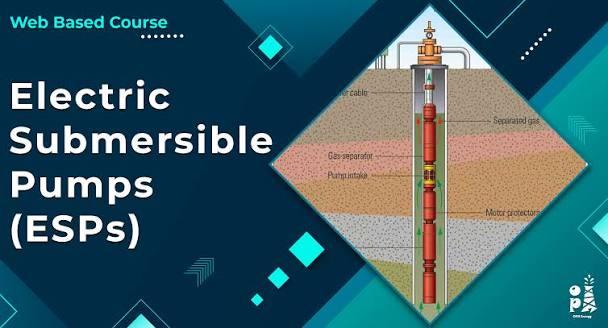
ESP System Components
Downhole motor
Multistage centrifugal pump
Protector and seal section
Intake systems
Gas separators and gas handlers
Power cable systems
Surface control equipment
Variable Speed Drives (VSDs)
Transformers and switchboards
Performance Fundamentals
Pump curves and operating envelopes
Flow rate versus head relationships
Efficiency calculations
Motor loading
Power consumption analysis
Factors affecting ESP performance
Production Challenges
High water cut
Gas interference
Sand production
Scale formation
Corrosion
High-temperature environments
Deep and deviated wells
Day 2: ESP Design for Complex Well Applications
ESP Design Methodology
Reservoir evaluation
Production forecasting
Fluid property analysis
Pump sizing techniques
Motor selection
Cable sizing
Surface equipment selection
Designing for Challenging Conditions
High gas-oil ratio wells
Heavy oil production
High-temperature wells
Offshore applications
Deepwater production
Horizontal wells
High-pressure reservoirs
Hydraulic Design
Total dynamic head calculations
Intake pressure analysis
Pump stage selection
Nodal analysis
Production optimization techniques
Practical Design Workshop
ESP design software overview
Design calculations
Equipment selection exercises
Field design examples
Review of successful ESP installations
Day 3: ESP Installation and Commissioning Best Practices
Installation Planning
Equipment inspection procedures
Quality assurance requirements
Handling and transportation
Pre-installation verification
Safety requirements
Installation Procedures
Running ESP assemblies
Cable handling techniques
Surface equipment installation
Wellhead integration
Electrical connections
Commissioning procedures
Startup Operations
Initial startup sequence
System testing
Performance verification
Baseline data collection
Operating parameter adjustments
Installation Challenges
Offshore installations
Deep wells
High-pressure environments
High-temperature applications
Common installation failures
Lessons learned from field operations
Practical Installation Case Studies
Successful installation projects
Failure analysis
Best practice implementation
Day 4: ESP Troubleshooting and Failure Analysis
Identifying ESP Problems
Electrical failures
Mechanical failures
Hydraulic performance issues
Motor overheating
Pump wear
Cable failures
Seal failures
Diagnostic Techniques
Surface data analysis
Downhole monitoring interpretation
Current and voltage analysis
Vibration monitoring
Temperature monitoring
Production trend evaluation
Root Cause Analysis
Failure investigation methodology
Equipment inspection
Operational data review
Failure pattern recognition
Corrective action planning
Preventive Maintenance
Maintenance planning
Equipment monitoring
Predictive maintenance techniques
Inspection schedules
Spare parts management
Interactive Troubleshooting Workshop
Real operational scenarios
Team-based diagnostics
Problem-solving exercises
Lessons from industry case studies
Day 5: ESP Performance Optimization
Production Optimization
Performance monitoring
Production data analysis
Variable Speed Drive optimization
Flow rate optimization
Energy efficiency improvements
Reliability Improvement
Reducing unplanned shutdowns
Increasing Mean Time Between Failures (MTBF)
Equipment reliability strategies
Risk mitigation
Operational excellence practices
Lifecycle Management
Extending equipment life
Cost optimization
Asset integrity management
Maintenance optimization
Replacement planning
Field Applications
Successful optimization projects
Lessons from international operations
Performance benchmarking
Emerging ESP technologies
Future industry trends
Course Review
Comprehensive technical review
Interactive discussion
Questions and answers
Participant feedback
Course summary
Why Attend This Course?
Master Advanced ESP Technology
Develop a thorough understanding of advanced Electrical Submersible Pump systems, including their design, operation, maintenance, and optimization in complex production environments.
Improve Operational Reliability
Learn practical techniques to diagnose failures, reduce equipment downtime, improve production continuity, and increase overall system reliability.
Build Practical Engineering Skills
Participate in realistic case studies, engineering calculations, troubleshooting exercises, and design workshops based on actual field operations.
Optimize Production Performance
Discover proven methods to maximize production rates, improve energy efficiency, optimize Variable Speed Drive performance, and reduce operating costs.
Enhance Equipment Lifespan
Understand preventive maintenance strategies, asset integrity practices, and lifecycle management techniques that significantly extend ESP service life.
Learn from Real Industry Applications
Study real operational challenges, successful field implementations, and industry best practices to confidently apply advanced ESP solutions in your own facilities.
Conclusion
The Advanced Electrical Submersible Pumps (ESP) Training Course provides an in-depth exploration of one of the most important artificial lift technologies used throughout the global oil and gas industry. Covering advanced system design, installation, commissioning, troubleshooting, maintenance, and performance optimization, this program equips participants with the technical expertise required to improve production efficiency and equipment reliability.
Upon completion of the course, participants will be able to confidently evaluate, operate, troubleshoot, and optimize Electrical Submersible Pump systems while applying international best practices to maximize production, reduce operational costs, minimize downtime, and extend equipment life in both conventional and challenging production environments.
Upcoming sessions
| City | Country | Date & time | Price | |
|---|---|---|---|---|
| Istanbul | Turkey | To be announced | 4,900.00 | Register now |
| Amman | Jordan | To be announced | 4,900.00 | Register now |
| Dubai | UAE | To be announced | 4,900.00 | Register now |
| Kuala Lumpur | Malaysia | To be announced | 4,900.00 | Register now |
| Cairo | Egypt | To be announced | 4,900.00 | Register now |
| Casablanca | Morocco | To be announced | 4,900.00 | Register now |
| Cape Town | South Africa | To be announced | 4,900.00 | Register now |
| Amsterdam | Netherlands | To be announced | 5,900.00 | Register now |
| Barcelona | Spain | To be announced | 5,900.00 | Register now |
| Paris | France | To be announced | 5,900.00 | Register now |
| Madrid | Spain | To be announced | 5,900.00 | Register now |
| Rome | Italy | To be announced | 5,900.00 | Register now |
| London | UK | To be announced | 6,100.00 | Register now |