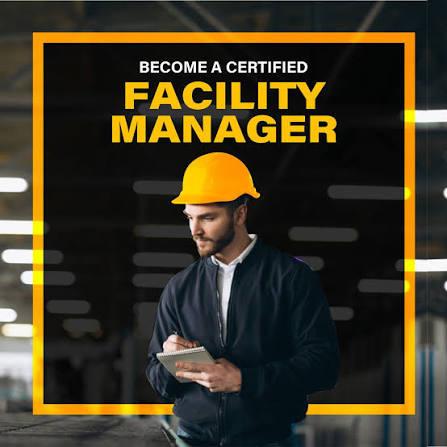
Certified Facility Manager (CFM)
Facility management certification training provides in-depth knowledge of facility management professionals!
Course content
Introduction
A modern corporate facility is far more than an arrangement of brick and mortar; it is a complex, living ecosystem that directly influences workforce productivity, operational safety, and enterprise profitability. The Certified Facility Manager (CFM) Training Course is specifically engineered for ambitious professionals looking to master this multi-disciplinary environment.
This comprehensive masterclass bridges the tactical gaps between real estate operations, corporate budgeting, environmental sustainability, and technological infrastructure management. By shifting your approach from traditional, reactive property maintenance to data-driven strategic planning, you will align everyday spatial operations with long-term organizational goals. Earning an advanced facility manager certification transforms your professional trajectory, proving to global employers that you possess the executive command, technical knowledge, and operational agility required to protect and optimize enterprise tangible assets.
Course Objectives
By completing this professional training program, participants will be able to:
Command Core Facility Manager Skills: Master institutional terminologies, asset lifecycles, and global operational standards to manage complex structural environments cleanly.
Drive Institutional Sustainability: Implement high-impact environmental strategies covering automated energy management, water preservation matrices, legal compliance frameworks, and comprehensive zero-waste pipelines.
Execute Strategic Workplace Alignment: Analyze the macroeconomic, social, and political variables affecting property management while shaping workspace strategies to match high-level business goals.
Optimize Project Management Workflows: Apply advanced analytical tools and scheduling frameworks to plan, execute, monitor, and audit complex facility upgrades, renewals, and architectural transformations.
Govern Real Estate Finance & Procurement: Direct precise capital budgeting models, complete rigorous financial analysis, and build rock-solid vendor procurement and contracting policies.
Mitigate Risk & Deploy Technology: Leverage integrated facility management systems (IWMS/CAFM), secure physical and cybersecurity frameworks, and execute resilient disaster response and business continuity blueprints.
Course Outlines
Day 1: Advanced Workplace Operations & Asset Maintenance
Occupant-Centric Service Delivery: Engineering supportive environments that maximize human performance, wellness, and collaboration.
Occupant Health, Safety, and Security (HSS): Implementing modern life-safety systems, indoor air quality standards, and access control architectures.
Core Infrastructure Architecture: Navigating predictive, preventative, and corrective maintenance pipelines for complex HVAC, electrical, plumbing, and structural systems.
FF&E Life Cycle Optimization: Managing furniture, fixtures, and specialized equipment from strategic procurement through disposition.
Work Management Support Pipelines: Deploying computerized maintenance management software (CMMS) to optimize dispatching, labor hours, and component inventories.
Renovation and Capital Renewal Engineering: Formulating tactical blueprints to execute property updates without triggering costly operational downtime.
High-Performance Team Leadership: Managing technical multi-disciplinary trade crews, navigating field bottlenecks, and coordinating virtual facility management stakeholders.
Day 2: Strategic Facility Planning & Environmental Sustainability
Regulatory Compliance & Policy Formulation: Structuring auditable facility guidelines aligned with building codes, environmental legislation, and labor laws.
Conflict Resolution and Organizational Leadership: Navigating stakeholder friction, corporate communications, and performance reviews in facilities management teams.
Navigating Organizational Change Management: Mitigating structural disruptions and managing employee transitions during complex physical corporate relocations or spatial restructurings.
Macroenvironmental Strategy Design: Evaluating social, political, economic, and industry disruptions impacting long-term real estate portfolios.
Resource Optimization Architectures: Deploying sophisticated energy, water, and building envelope conservation initiatives to drive down operational expenditures.
Zero-Waste and Green Building Management: Aligning ongoing operations with international green certifications (such as LEED or BREEAM) and sustainable supply chains.
Day 3: Integrated Facility Information & Technology Management
Data-Driven Operations & IWMS: Leveraging Integrated Workplace Management Systems and CAFM tools to systematically collect and interpret operational data.
Physical-Cybersecurity Synchronization: Hardening building automation system (BAS) endpoints against digital threats and protecting proprietary information networks.
Technological Needs Assessment: Designing objective matrices to evaluate, justify, and onboard new smart-building systems and Internet of Things (IoT) sensors.
Lifecycle Technology Management: Scheduling software upgrades, system calibrations, and legacy infrastructure decommissioning patterns.
Day 4: Corporate Risk Management, Crisis Response & Resilience
Proactive Risk Analysis Frameworks: Constructing comprehensive risk assessment matrices to isolate, calculate, and mitigate spatial vulnerabilities.
Emergency Preparedness & Command Operations: Building agile crisis response blueprints for natural disasters, active threats, structural failures, and utility outages.
Business Continuity and Facility Resilience: Designing structural redundancies, secondary operational hubs, and fallback systems to preserve core business uptime under pressure.
Program Evaluation Matrixing: Using Key Performance Indicators (KPIs) to audit, refine, and present the efficacy of safety and risk mitigation protocols to executive leadership.
Day 5: Facility Finance, Real Estate Strategy & Procurement
Capital and Operational Budgeting (CapEx & OpEx): Constructing data-backed balance sheet projections, tracking variances, and defending resource allocations.
Evidence-Based Business Case Engineering: Utilizing financial metrics (such as ROI, NPV, and IRR) to construct airtight business justifications for major machinery overhauls and spatial upgrades.
Strategic Sourcing & Procurement: Navigating the end-to-end vendor purchasing cycle for complex hardware, tools, and outsourced specialized services.
Contractual Governance & SLA Engineering: Drafting unambiguous Service Level Agreements (SLAs) and tracking third-party contractor compliance.
Corporate Real Estate Asset Optimization: Evaluating property portfolios, executing transactional acquisitions, and organizing strategic real estate disposals.
Space Management and Construction Administration: Optimizing interior square footage layouts, navigating churn rates, and coordinating major capital new-construction developments.
Why Attend This Course: Wins & Losses!
What You Win:
Elite Professional Standing: Walk away with an industry-revered Certified Facility Manager (CFM) pathway credential that commands immediate authority in the global real estate sector.
Comprehensive Tactical Mastery: Move past superficial maintenance and build deep, career-ready expertise across all ten core competencies of institutional facility management.
Strategic Executive Leverage: Learn the precise financial and strategic language required to present business cases directly to the C-suite and align space choices with corporate profitability.
Optimized Operational Budgets: Gain the skills to identify cost leaks, negotiate airtight procurement contracts, and streamline infrastructure maintenance workflows.
Future-Proof Career Growth: Unlock priority placement across international job networks by meeting the exact credential requirements for senior real estate and operations director roles.
What You Lose:
Reactive Firefighting Habits: Say goodbye to constant operational panics and unexpected, costly mechanical breakdowns by migrating your organization to predictive asset lifecycles.
Budgetary Blindspots: Stop struggling to justify infrastructure spending; eliminate financial guess-work via clear, mathematical CapEx and OpEx planning.
Resource and Utility Waste: Eliminate expensive spatial inefficiencies, excessive energy utilization, and compliance penalties that erode corporate profits.
Conclusion
At the end of the day, poor physical operations can paralyze an entire enterprise, while optimized facilities serve as structural accelerators for corporate growth. The Certified Facility Manager (CFM) Training Course delivers the complete technical, operational, and financial toolkit required to master this high-stakes field.
This isn't a passive presentation on structural repairs; it is an intensive, execution-focused professional masterclass built to transform you into a strategic asset leader. Whether you are aiming to lock in a global facility manager certification, optimize cross-departmental operations, or permanently secure your organization’s physical footprint, this program provides the definitive roadmap.
FAQ
What is the primary role of a Certified Facility Manager (CFM)?
A Certified Facility Manager (CFM) is responsible for ensuring that an organization's physical workplace and tangible assets are operating safely, efficiently, and sustainably. Their duties bridge strategic real estate planning, operational infrastructure maintenance, energy and sustainability compliance, technology management, financial budgeting, and comprehensive physical risk mitigation to completely align facility performance with broader business objectives.
What is the difference between property management and facility management?
Property management is primarily commercial and transactional, focusing on real estate leasing, tenant acquisitions, rent collection, and maximizing the financial investment return of a building portfolio. Facility management is highly operational and occupant-centric, focusing on the internal ecosystem of a building—such as optimizing daily workspaces, managing technological infrastructure, maintaining HVAC/life-safety assets, and ensuring the health, safety, and productivity of the workforce within that space.
Why is financial planning important in facility management roles?
Financial planning is critical because facility operations represent one of the largest ongoing expenditures on an organization's balance sheet. Mastering capital budgeting (CapEx) and operational budgeting (OpEx) allows facilities managers to accurately project equipment replacement timelines, justify ROI for infrastructure upgrades to corporate leadership, minimize waste, and implement data-driven vendor procurement strategies that directly protect corporate profitability.
Upcoming sessions
| City | Country | Date & time | Price | |
|---|---|---|---|---|
| Istanbul | Turkey | To be announced | 4,200.00 | Register now |
| Amman | Jordan | To be announced | 4,200.00 | Register now |
| Dubai | UAE | To be announced | 4,200.00 | Register now |
| Kuala Lumpur | Malaysia | To be announced | 4,200.00 | Register now |
| Cairo | Egypt | To be announced | 4,200.00 | Register now |
| Casablanca | Morocco | To be announced | 4,200.00 | Register now |
| Cape Town | South Africa | To be announced | 4,200.00 | Register now |
| Amsterdam | Netherlands | To be announced | 5,200.00 | Register now |
| Barcelona | Spain | To be announced | 5,200.00 | Register now |
| Paris | France | To be announced | 5,200.00 | Register now |
| Madrid | Spain | To be announced | 5,200.00 | Register now |
| Rome | Italy | To be announced | 5,200.00 | Register now |
| London | UK | To be announced | 5,400.00 | Register now |