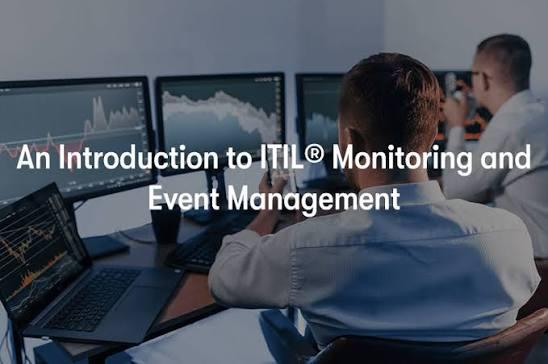
ITIL 4 Practitioner: Monitoring and Event Management Introduction
Introduction to ITIL 4 monitoring and event management
Course content
Introduction
In modern digital ecosystems, waiting for an outage to occur before taking action is a recipe for operational failure. The ITIL 4 Practitioner: Monitoring and Event Management course provides a structured, proactive framework for observing IT systems, identifying state changes, and responding to critical events before they impact business performance. Designed specifically for executives, IT infrastructure leads, service managers, and cross-functional teams across the Middle East and North Africa (MENA)—including sectors such as telecommunications, government services, banking, and energy—this five-day masterclass bridges the gap between raw system telemetry and business-aligned service stability. Participants will master the tools, metrics, and workflows required to establish real-time visibility across complex hybrid environments, eliminate false positives, and streamline collaboration between monitoring teams and broader ITIL practices.
Course Objectives
By completing this masterclass, participants will be able to: Master Core ITIL 4 Concepts: Understand the key principles, scope, and strategic value of the ITIL 4 Monitoring and Event Management practice.. Build Proactive Monitoring Frameworks: Shift organizational posture from reactive firefighting to automated, early-stage event detection. Classify & Prioritize Events: Establish precise threshold criteria to categorize events (informational, warning, exception) based on true operational impact. Deploy Advanced Monitoring Tools: Leverage modern telemetry, automated monitoring suites, and analytics engines to streamline event tracking. Establish Key Metrics: Define actionable Key Performance Indicators (KPIs) and Service Level Indicators (SLIs) to evaluate practice maturity and system health. Optimize Incident Pipelines: Design rapid response protocols and automated playbooks to accelerate incident triage and resolution. Integrate ITIL 4 Practices: Seamlessly connect Monitoring and Event Management with Incident Management, Problem Management, and Change Enablement. Drive Strategic Decision-Making: Use historical event telemetry and trend analysis to make informed infrastructure investments and risk mitigations.
Course Outline
Day 1: Fundamentals of ITIL 4 Monitoring & Event Management ITIL 4 Service
Value System (SVS): Aligning monitoring practices with organizational value streams. Definitions & Scope: Distinguishing clearly between monitoring, event management, and incident management. The Event Lifecycle: Mapping event generation, detection, filtering, significance assessment, and response. Telemetry & Data Sources: Identifying key metrics across infrastructure, applications, network layers, and cloud services. Governance & Roles: Defining roles, responsibilities, and operational governance for monitoring teams. Real-World Case Studies: Analyzing how proactive monitoring reduces downtime and protects business continuity.
Day 2: Detection, Thresholds & Event Classification Advanced Detection Techniques
Active vs. passive monitoring, synthetic transactions, and agentless tracking. Configuring Alerts & Notifications: Setting intelligent thresholds to prevent alert fatigue and noise pollution. Event Classification Models: Categorizing events by severity, priority, and business criticality. Escalation Pathways: Establishing clear, multi-tiered escalation protocols across technical and operational units. Response Playbooks: Developing standard operating procedures (SOPs) and automated scripts for recurring events. Practical Workshop: Hands-on scenario exercise in event classification and threshold design.
Day 3: Critical Event Handling & Incident Integration Major Event Protocols
Strategies for handling high-impact, business-critical system anomalies. Cross-Functional Communication: Managing internal stakeholder updates and external customer notifications under pressure. Accelerating Service Restoration: Integrating monitoring tools directly with Service Desk and Incident Management workflows. Multi-Cloud & Hybrid Environments: Tracking health metrics across distributed, multi-vendor infrastructures. Support Coordination: Synchronizing field engineers, Tier-2/3 technical teams, and third-party vendors during active events. Simulation Lab: Executing a live-action simulation of a major infrastructure event response.
Day 4: Root Cause Analysis, Analytics & Continuous Improvement Post-Event
Root Cause Analysis (RCA): Connecting recurring events to underlying architectural flaws and problem management. Leveraging Historical Telemetry: Using trend analysis and predictive analytics to anticipate capacity bottlenecks and service failures. Preventive Engineering: Updating monitoring configurations, alert rules, and thresholds based on post-incident reviews. Service Quality Alignment: Using event data to validate Service Level Agreements (SLAs) and Operational Level Agreements (OLAs). Team Upskilling: Building sustainable training programs for NOC/SOC operators and system engineers.
Day 5: Performance Evaluation, Strategy & Program Closure Measuring Practice Success
Assessing critical KPIs (e.g., Mean Time to Detect [MTTD], Mean Time to Acknowledge [MTTA], False Positive Ratios). Executive Reporting: Translating complex technical telemetry into clear, business-focused reports for senior leadership. Full-Scale Capstone Exercise: End-to-end evaluation simulating event detection, triage, resolution, and post-event analysis. Personalized Implementation Blueprints: Crafting a 90-day action plan for deploying ITIL 4 monitoring frameworks within your organization. Course Wrap-Up & Certification: Comprehensive review, assessment, and credential presentation.
Why Attend This Course
What Your Organization Gains (Wins) What You Avoid by Attending (Losses) Proactive Operational Control: Spot system anomalies and performance drops before end users notice disruptions. Costly Outages: Eliminates unmonitored single points of failure that cause widespread business downtime. Reduced Alert Fatigue: Intelligent event filtering ensures engineers respond only to actionable, high-priority threats. Wasted Engineering Hours: Prevents technical teams from chasing false positives and redundant alarm notifications. Accelerated Incident Triage: Automated event classification routes critical alerts directly to the correct escalation paths. Escalation Bottlenecks: Avoids delayed response times caused by unclear roles and missing operational playbooks. Data-Driven Infrastructure Decisions: Leverage historical telemetry to optimize hardware, cloud resources, and capacity planning. Reactive Spending: Prevents emergency infrastructure expenditure driven by unpredicted capacity overloads. Strengthened Customer & Stakeholder Trust: Consistently high service uptime protects brand reputation and SLA compliance. SLA Penalties & Reputational Damage: Prevents revenue loss and regulatory non-compliance resulting from service degradation.
FAQ
Who should take this ITIL 4 Practitioner course?
This course is custom-tailored for IT service managers, Network Operations Center (NOC) leads, Security Operations Center (SOC) analysts, systems engineers, enterprise architects, and IT operations directors seeking to implement structured, proactive monitoring practices.
Is this program relevant for organizations outside the traditional IT sector?
Yes. Modern public sector agencies, financial institutions, telecommunication providers, and energy firms rely entirely on digital infrastructure. The ITIL 4 monitoring methodologies taught in this course apply universally across any enterprise environment.
What practical deliverables will I take away from this training?
You will depart with a customizable Event Classification Framework, a Monitoring KPI Dashboard Template, a standard Incident Escalation Playbook, and a personalized 90-day ITIL 4 Implementation Plan tailored to your department's specific technical architecture.
Conclusion
In an era of hyper-connected systems, passive IT monitoring is no longer sufficient. Organizations that master ITIL 4 Monitoring and Event Management transform raw system noise into clear operational intelligence, insulating their infrastructure against downtime and driving continuous service improvement. Whether your goal is to modernize your Network Operations Center, streamline cross-departmental incident pipelines, or align IT health with executive business objectives, this masterclass hands you the exact frameworks and technical confidence required to succeed. Secure your seat today, refine your operational infrastructure, and turn real-time system telemetry into a lasting strategic advantage.
Upcoming sessions
| City | Country | Date & time | Price | |
|---|---|---|---|---|
| Istanbul | Turkey | To be announced | 4,900.00 | Register now |
| Amman | Jordan | To be announced | 4,900.00 | Register now |
| Dubai | UAE | To be announced | 4,900.00 | Register now |
| Kuala Lumpur | Malaysia | To be announced | 4,900.00 | Register now |
| Cairo | Egypt | To be announced | 4,900.00 | Register now |
| Casablanca | Morocco | To be announced | 4,900.00 | Register now |
| Cape Town | South Africa | To be announced | 4,900.00 | Register now |
| Amsterdam | Netherlands | To be announced | 5,900.00 | Register now |
| Barcelona | Spain | To be announced | 5,900.00 | Register now |
| Paris | France | To be announced | 5,900.00 | Register now |
| Madrid | Spain | To be announced | 5,900.00 | Register now |
| Rome | Italy | To be announced | 5,900.00 | Register now |
| London | UK | To be announced | 6,100.00 | Register now |